"[I]t is beyond all ordinary rules that I, a poor, helpless, undone sinner, should find grace to bear about in my soul the indwelling Spirit of the Lord Jesus. I, who once despaired, as well I might, for my nature was as dry, and withered, and barren, and accursed as a howling wilderness, even I have been made to bring forth fruit unto holiness. Well may my mouth be filled with joyous laughter, because of the singular, surprising grace which I have received of the Lord, for I have found Jesus, the promised seed, and He is mine for ever.This day I will lift up psalms of triumph unto the Lord who has remembered my low estate...."
~ C.H.Spurgeon
from Morning & Evening
(June 15, Morning)
Showing posts with label worthy quotes. Show all posts
Showing posts with label worthy quotes. Show all posts
Wednesday, June 15, 2011
Sunday, June 5, 2011
Evening Prayer
From Poems, by C.S.Lewis (pp. 129-130):
THE APOLOGISTS'S EVENING PRAYER
From all my lame defeats and oh! much more
From all the victories that I seemed to score;
From cleverness shot forth on Thy behalf
At which, while angels weep, the audience laugh;
From all my proofs of Thy divinity,
Thou, who wouldst give no sign, deliver me.
Thoughts are but coins. Let me not trust, instead
Of Thee, their thin-worn image of Thy head.
From all my thoughts, even from my thoughts of Thee,
O thou fair Silence, fall, and set me free.
Lord of the narrow gate and the needle's eye,
Take from me all my trumpery lest I die.
* * *
FOOTNOTE TO ALL PRAYERS
He whom I bow to only knows to whom I bow
When I attempt the ineffable Name, murmuring Thou,
And dream of Pheidian fancies and embrace in heart
Symbols (I know) which cannot be the thing Thou art.
Thus always, taken at their word, all prayers blaspheme
Worshipping with frail images a folk-lore dream,
And all men in their praying, self-deceived, address
The coinage of their own unquiet thoughts, unless
Thou in magnetic mercy to Thyself divert
Our arrows, aimed unskillfully, beyond desert;
And all men are idolators, crying unheard
To a deaf idol, if Thou take them at their word.
Take not, oh Lord, our literal sense. Lord, in Thy great,
Unbroken speech our limping metaphor translate.
* * *
AFTER PRAYERS LIE COLD
Arise my body, my small body, we have striven
Enough, and He is merciful; we are forgiven.
Arise small body, puppet-like and pale, and go,
White as the bed-clothes into bed, and cold as snow,
Undress with small, cold fingers and put out the light,
And be alone, hush'd mortal, in the sacred night,
--A meadow whipt flat with the rain, a cup
Emptied and clean, a garment washed and folded up,
Faded in colour, thinned almost to raggedness
By dirt and by the washing of that dirtiness.
Be not too quickly warm again. Lie cold; consent
To weariness' and pardon's watery element.
Drink up the bitter water, breathe the chilly death;
Soon enough comes the riot of our blood and breath.
THE APOLOGISTS'S EVENING PRAYER
From all my lame defeats and oh! much more
From all the victories that I seemed to score;
From cleverness shot forth on Thy behalf
At which, while angels weep, the audience laugh;
From all my proofs of Thy divinity,
Thou, who wouldst give no sign, deliver me.
Thoughts are but coins. Let me not trust, instead
Of Thee, their thin-worn image of Thy head.
From all my thoughts, even from my thoughts of Thee,
O thou fair Silence, fall, and set me free.
Lord of the narrow gate and the needle's eye,
Take from me all my trumpery lest I die.
* * *
FOOTNOTE TO ALL PRAYERS
He whom I bow to only knows to whom I bow
When I attempt the ineffable Name, murmuring Thou,
And dream of Pheidian fancies and embrace in heart
Symbols (I know) which cannot be the thing Thou art.
Thus always, taken at their word, all prayers blaspheme
Worshipping with frail images a folk-lore dream,
And all men in their praying, self-deceived, address
The coinage of their own unquiet thoughts, unless
Thou in magnetic mercy to Thyself divert
Our arrows, aimed unskillfully, beyond desert;
And all men are idolators, crying unheard
To a deaf idol, if Thou take them at their word.
Take not, oh Lord, our literal sense. Lord, in Thy great,
Unbroken speech our limping metaphor translate.
* * *
AFTER PRAYERS LIE COLD
Arise my body, my small body, we have striven
Enough, and He is merciful; we are forgiven.
Arise small body, puppet-like and pale, and go,
White as the bed-clothes into bed, and cold as snow,
Undress with small, cold fingers and put out the light,
And be alone, hush'd mortal, in the sacred night,
--A meadow whipt flat with the rain, a cup
Emptied and clean, a garment washed and folded up,
Faded in colour, thinned almost to raggedness
By dirt and by the washing of that dirtiness.
Be not too quickly warm again. Lie cold; consent
To weariness' and pardon's watery element.
Drink up the bitter water, breathe the chilly death;
Soon enough comes the riot of our blood and breath.
Tuesday, January 26, 2010
Evening at Crickhollow
 s they walked up the green path from the gate no light was visible; the windows were dark and shuttered. Frodo knocked on the door, and Fatty Bolger opened it. A friendly light streamed out. They slipped in quickly and shut themselves and the light inside. They were in a wide hall with doors on either side; in front of them a passage ran back down the middle of the house.
‘Well, what do you think of it?’ asked Merry coming up the passage. ‘We have done our best in a short time to make it look like home. After all Fatty and I only got here with the last cart-load yesterday.’
Frodo looked round. It did look like home. Many of his own favourite things—or Bilbo’s things (they reminded him sharply of him in their new setting)—were arranged as nearly as possible as they had been at Bag End. It was a pleasant, comfortable, welcoming place; and he found himself wishing that he was really coming here to settle down in quiet retirement. It seemed unfair to have to put his friends to all this trouble; and he wondered again how he was going to break the news to them that he must leave them so soon, indeed at once. Yet that would have to be done that very night, before they all went to bed.
‘It’s delightful!’ he said with an effort. ‘I hardly feel that I have moved at all.’
The travelers hung up their cloaks, and piled their packs on the floor. Merry led them down the passage and threw open a door at the far end. Firelight came out, and a puff of steam.
‘A bath!’ cried Pippin. ‘O blessed Meriadoc!’
‘Which order shall we go in?’ said Frodo. ‘Eldest first, or quickest first? You’ll be last either way, master Peregrin.’
‘Trust me to arrange things better than that!’ said Merry. ‘We can’t begin life at Crickhollow with a quarrel over baths. In that room there are three tubs, and a copper full of boiling water. There are also towels, mats and soap. Get inside, and be quick!’
Merry and Fatty went into the kitchen on the other side of the passage, and busied themselves with the final preparations for a late supper. Snatches of competing songs came from the bathroom mixed with the sound of splashing and wallowing. The voice of Pippin was suddenly lifted up above the others in one of Bilbo’s favourite bath-songs.
Sing hey! For the bath at close of dayThere was a terrific splash, and a shout of Whoa! From Frodo. It appeared that a lot of Pippin’s bath had imitated a fountain and leaped on high.
that washes the weary mud away!
A loon is he that will not sing:
O! Water Hot is a noble thing!
O! Sweet is the sound of falling rain,
and the brook that leaps from hill to plain;
but better than rain or rippling streams
is Water Hot that smokes and steams.
O! Water cold we may pour at need
down a thirsty throat and be glad indeed;
but better is Beer, if drink we lack,
and Water Hot poured down the back.
O! Water is fair that leaps on high
in a fountain white beneath the sky;
but never did fountain sound so sweet
as splashing Hot Water with my feet!
Merry went to the door: ‘What about supper and beer in the throat?’ he called. Frodo came out drying his hair.
‘There’s so much water in the air that I’m coming into the kitchen to finish,’ he said.
‘Lawks!’ said Merry, looking in. The stone floor was swimming. ‘ You ought to mop all that up before you get anything to eat, Peregrin,’ he said. ‘Hurry up, or we shan’t wait for you.’
They had supper in the kitchen on a table near the fire. ‘I suppose you three won’t want mushrooms again?’ said Fredegar without much hope.
‘Yes we shall!’ cried Pippin.
‘They’re mine!’ said Frodo. ‘Given to me by Mrs. Maggot, a queen among farmers’ wives. Take your greedy hands away, and I’ll serve them.’
Hobbits have a passion for mushrooms, surpassing even the greediest likings of Big People. A fact which partly explains young Frodo’s long expeditions to the renowned fields of the Marish, and the wrath of the injured Maggot. On this occasion there was plenty for all, even according to hobbit standards. There were also many other things to follow, and when they had finished even Fatty Bolger heaved a sigh of content. They pushed back the table, and drew chairs round the fire.”

FROM The Fellowship of the Ring
by J.R.R. Tolkien
Monday, June 22, 2009
Isaiah 58
58:1 “Cry aloud; do not hold back;
lift up your voice like a trumpet;
declare to my people their transgression,
to the house of Jacob their sins.
2 Yet they seek me daily
and delight to know my ways,
as if they were a nation that did righteousness
and did not forsake the judgment of their God;
they ask of me righteous judgments;
they delight to draw near to God.
3 ‘Why have we fasted, and you see it not?
Why have we humbled ourselves, and you take no knowledge of it?’
Behold, in the day of your fast you seek your own pleasure,
and oppress all your workers.
4 Behold, you fast only to quarrel and to fight
and to hit with a wicked fist.
Fasting like yours this day
will not make your voice to be heard on high.
5 Is such the fast that I choose,
a day for a person to humble himself?
Is it to bow down his head like a reed,
and to spread sackcloth and ashes under him?
Will you call this a fast,
and a day acceptable to the Lord?
6 “Is not this the fast that I choose:
to loose the bonds of wickedness,
to undo the straps of the yoke,
to let the oppressed go free,and to break every yoke?
7 Is it not to share your bread with the hungry
and bring the homeless poor into your house;
when you see the naked, to cover him,
and not to hide yourself from your own flesh?
8 Then shall your light break forth like the dawn,
and your healing shall spring up speedily;
your righteousness shall go before you;
the glory of the Lord shall be your rear guard.
9 Then you shall call, and the Lord will answer;
you shall cry, and he will say, ‘Here I am.’
If you take away the yoke from your midst,
the pointing of the finger, and speaking wickedness,
10 if you pour yourself out for the hungry
and satisfy the desire of the afflicted,
then shall your light rise in the darkness
and your gloom be as the noonday.
11 And the Lord will guide you continually
and satisfy your desire in scorched places
and make your bones strong;
and you shall be like a watered garden,
like a spring of water,
whose waters do not fail.
12 And your ancient ruins shall be rebuilt;
you shall raise up the foundations of many generations;
you shall be called the repairer of the breach,
the restorer of streets to dwell in.
13 “If you turn back your foot from the Sabbath,
from doing your pleasure on my holy day,
and call the Sabbath a delight
and the holy day of the Lord honorable;
if you honor it, not going your own ways,
or seeking your own pleasure, or talking idly;
14 then you shall take delight in the Lord,
and I will make you ride on the heights of the earth;
I will feed you with the heritage of Jacob your father,
for the mouth of the Lord has spoken.”
.
.
* * * * *
Listen:
Cornerstone Church Sermon Player
--> go to Living a Life that Matters - "Living to Display the Gospel"
..{Cornerstone Church site}..
lift up your voice like a trumpet;
declare to my people their transgression,
to the house of Jacob their sins.
2 Yet they seek me daily
and delight to know my ways,
as if they were a nation that did righteousness
and did not forsake the judgment of their God;
they ask of me righteous judgments;
they delight to draw near to God.
3 ‘Why have we fasted, and you see it not?
Why have we humbled ourselves, and you take no knowledge of it?’
Behold, in the day of your fast you seek your own pleasure,
and oppress all your workers.
4 Behold, you fast only to quarrel and to fight
and to hit with a wicked fist.
Fasting like yours this day
will not make your voice to be heard on high.
5 Is such the fast that I choose,
a day for a person to humble himself?
Is it to bow down his head like a reed,
and to spread sackcloth and ashes under him?
Will you call this a fast,
and a day acceptable to the Lord?
6 “Is not this the fast that I choose:
to loose the bonds of wickedness,
to undo the straps of the yoke,
to let the oppressed go free,and to break every yoke?
7 Is it not to share your bread with the hungry
and bring the homeless poor into your house;
when you see the naked, to cover him,
and not to hide yourself from your own flesh?
8 Then shall your light break forth like the dawn,
and your healing shall spring up speedily;
your righteousness shall go before you;
the glory of the Lord shall be your rear guard.
9 Then you shall call, and the Lord will answer;
you shall cry, and he will say, ‘Here I am.’
If you take away the yoke from your midst,
the pointing of the finger, and speaking wickedness,
10 if you pour yourself out for the hungry
and satisfy the desire of the afflicted,
then shall your light rise in the darkness
and your gloom be as the noonday.
11 And the Lord will guide you continually
and satisfy your desire in scorched places
and make your bones strong;
and you shall be like a watered garden,
like a spring of water,
whose waters do not fail.
12 And your ancient ruins shall be rebuilt;
you shall raise up the foundations of many generations;
you shall be called the repairer of the breach,
the restorer of streets to dwell in.
13 “If you turn back your foot from the Sabbath,
from doing your pleasure on my holy day,
and call the Sabbath a delight
and the holy day of the Lord honorable;
if you honor it, not going your own ways,
or seeking your own pleasure, or talking idly;
14 then you shall take delight in the Lord,
and I will make you ride on the heights of the earth;
I will feed you with the heritage of Jacob your father,
for the mouth of the Lord has spoken.”
.
.
* * * * *
Listen:
Cornerstone Church Sermon Player
--> go to Living a Life that Matters - "Living to Display the Gospel"
..{Cornerstone Church site}..
Saturday, April 11, 2009
“[I]n respect of our ignorance, we stand in need of His prophetical office;
and in respect of our alienation from God, and imperfection of the best of our
services, we need His priestly office to reconcile us and present us acceptable
unto God; and in respect of our averseness and utter inability to return to
God, and for our rescue and security from our spiritual adversaries, we need His
kingly office to convince, subdue, draw, uphold, deliver, and preserve us to His
heavenly kingdom.”
(The London Baptist Confession of Faith of 1689, VIII “Of Christ the Mediator”:10)
Friday, April 10, 2009
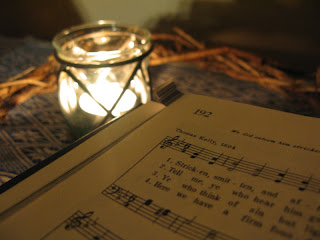
We did esteem him stricken, smitten of God, and afflicted. Isa. 53:4
Stricken, smitten, and afflicted,
See him dying on the tree!
‘Tis the Christ by man rejected;
Yes, my soul, ‘tis he, ‘tis he!
‘Tis the long expected Prophet,
David’s Son, yet David’s Lord;
By his Son God now has spoken:
‘Tis the true and faithful Word.
Tell me, ye who hear him groaning,
Was there ever grief like his?
Friends thro’ fear his cause disowning,
Foes insulting his distress;
Many hands were raised to wound him,
None would interpose to save;
But the deepest stroke that pierced him
Was the stroke that Justice gave.
Ye who think of sin but lightly
Nor suppose the evil great
Here may view its nature rightly,
Here its guilt may estimate.
Mark the sacrifice appointed,
See who bears the awful load;
‘Tis the Word, the Lord’s Anointed,
Son of Man and Son of God.
Here we have a firm foundation,
Here the refuge of the lost;
Christ’s the Rock of our salvation,
His the name of which we boast.
Lamb of God, for sinners wounded,
Sacrifice to cancel guilt!
None shall ever be confounded
Who on him their hope have built.
Thomas Kelly, 1804
O MEIN JESU, ICH MUSS STERBEN 8.7.8.7.D.
Geistliche Volkslieder, Paderborn, 1850.

“It pleased God, in His eternal purpose, to choose and ordain the Lord Jesus, His only begotten Son, according to the covenant made between them both, to be the Mediator between God and man; the Prophet, Priest, and King; Head and Savior of His church, the Heir of all things, and Judge of the world; unto whom He did from all eternity give a people to be His seed and to be by Him in time redeemed, called, justified, sanctified, and glorified.
The Son of God, the second person in the Holy Trinity, being very and eternal God, the brightness of the Father’s glory, of one substance and equal with Him who made the world, who upholdeth and governeth all things He hath made, did, when the fullness of time was come, take unto Him man’s nature, with all the essential properties and common infirmities thereof, yet without sin….
The Lord Jesus, in His human nature thus united to the divine, in the person of the Son, was sanctified and anointed with the Holy Spirit above measure, having in Him all the treasures of wisdom and knowledge; in whom it pleased the Father that all fullness should dwell, to the end that being holy, harmless, undefiled, and full of grace and truth, He might be thoroughly furnished to execute the office of a mediator and surety; which office He took not upon Himself, but was thereunto called by His Father; who also put all power and judgement in His hand, and gave Him commandment to execute the same.
This office the Lord Jesus did most willingly undertake, which that He might discharge He was made under the law, and did perfectly fulfill it, and underwent the punishment due to us, which we should have borne and suffered, being made sin and a curse for us; enduring most grievous sorrows in His soul, and most painful sufferings in His body; was crucified, and died, and remained in the state of the dead, yet saw no corruption: on the third day He arose from the dead with the same body in which He suffered, with which He also ascended into heaven, and there sitteth at the right hand of His Father making intercession, and shall return to judge men and angels at the end of the world.
The Lord Jesus, by His perfect obedience and sacrifice of Himself, which He through the eternal Spirit once offered up unto God, hath fully satisfied the justice of God, procured reconciliation, and purchased an everlasting inheritance in the kingdom of heaven for all those whom the Father hath given unto Him.”
(The London Baptist Confession of Faith of 1689, VIII “Of Christ the Mediator”)

Monday, April 6, 2009
::
“Gradually she became aware of the moon daisies and the scent of the lime
flowers that were just beginning to blossom. Today’s sunshine, after rain in the
night, was bringing it out. She turned round and looked up at the bunches of
pale green, not unlike her vine flowers. The scent too was not unlike though the
scent of the vine flowers was delicate and this was strong and powerful as the
vibrating hum of the bees who were gathering the honey. The sunshine, striking
down in rods of light through the ceiling of green leaves, was gold as that
honey. There was goodness here, in scent and sound and splendour of light, and
if it gave no explanation of man’s tragedy it gave reassurance."
from The Scent of Water
by Elizabeth Goudge
(p.144)
Wednesday, January 28, 2009
~From Christian’s discourse with Piety, Prudence and Charity at the house, Beautiful.~
From The Pilgrim’s Progress, by John Bunyan
I transcribed this from an audio recording, so the punctuation and capitalization is all mine. Please excuse it.
I don’t have a hard copy of the original in my home (*horror*).
"PRUDENCE: ‘Do you not yet bear away with you some of the things that then you were conversant withal?’
CHRISTIAN: ‘Yes, but greatly against my will, especially my inward and carnal cogitations with which all my countrymen, as well as myself, were delighted. But now all those things are my grief, and might I but choose mine own things I would choose never to think of those things more; but when I would be doing that which is best that which is worst is with me.’
PRUDENCE: ‘Do you not find sometimes as if those things were vanquished which at other times are your perplexity?’
CHRISTIAN: ‘Yes, but that is but seldom, but they are to me golden hours in which such things happens to me.’
PRUDENCE: ‘Can you remember by what means you find your annoyances at times as if they were vanquished?’
CHRISTIAN: ‘Yes, when I think what I saw at the cross, that will do it; and when I look upon my broidered coat, that will do it. Also when I look into the roll that I carry in my bosom, that will do it; and when my thoughts wax warm about wither I am going, that will do it’
PRUDENCE: ‘And what is it that makes you so desirous to go to Mount Zion?’
CHRISTIAN: ‘Why, there I hope to see Him alive that did hang dead on the cross, and there I hope to be rid of all those things that to this day are in me an annoyance to me. There they say there is no death, and there I shall dwell with such company as I like best. For to tell you truth, I love Him, for because I was by Him eased of my burden, and I am weary of my inward sickness. I would feign be where I should die no more, and with the company that should continually cry, “Holy, holy, holy”.’"
From The Pilgrim’s Progress, by John Bunyan
I transcribed this from an audio recording, so the punctuation and capitalization is all mine. Please excuse it.
I don’t have a hard copy of the original in my home (*horror*).
Saturday, November 29, 2008
A Budding Bibliophile
 Exploring the stack at Mimi and Pa's house
“[B]ooks in the study, books in the drawing room, books in the cloakroom, books (two deep) in the great bookcase on the landing, books in the bedroom, books piled high as [a child’s] shoulder in the cistern attic, books of all kinds…, books readable and unreadable, books suitable for a child and books most emphatically not.”~C.S. Lewis, describing his childhood home
Saturday, November 22, 2008
Early evening cup of hot tea

 PG Tips. Always the perfect thing.
The temperature was down to five degrees (F) Thursday night. Today has been more pleasant, hovering around freezing, and we woke up to some snow. It was dark already at five. I wasn’t paying attention to when the sun actually went down. It’s earlier every evening, making for long cozy evenings.
I started reading just the perfect sort of book for an evening like this. Big Mutt is a book that Daddy read aloud to us on winter evenings when I was little. We loved it. He read many chapter books to us about animals in the winter, but this was a special favorite. I haven’t read it for about ten years, and am thoroughly enjoying the rereading of it. North Dakota. In the winter. Sheep herders and wild dogs. A boy who loves the wild things.
My dear siblings know what brings me joy to have in my home and gift me with copies of treasures from the shelves of Mama and Papa’s house. This was one such present on my birthday from my brother. Said brother is spending his days in a deer stand this weekend. Brrr.
*(pp. 18-19, Big Mutt by John Reese, 1952)
I started reading just the perfect sort of book for an evening like this. Big Mutt is a book that Daddy read aloud to us on winter evenings when I was little. We loved it. He read many chapter books to us about animals in the winter, but this was a special favorite. I haven’t read it for about ten years, and am thoroughly enjoying the rereading of it. North Dakota. In the winter. Sheep herders and wild dogs. A boy who loves the wild things.
“Water from countless tearing floods had cut this deep gully. The whole area was a network of gullies, making it worthless for grazing. Here, numerous families of coyotes had made their dens. It was the scent of one of these that came sharply to the big mutt’s nostrils.
It was a lucky find for him, because the old male that was head of this family of five coyotes had hidden their den skillfully. The coyotes heard the big mutt crashing through the deep snow, and scurried out into the storm, rather than fight him. They had worn a little winding path up the steep wall. They fled in single file, snarling silently, the old he-coyote in the lead.
The dog let them go and crawled into their warm cave, which they had padded with grass and the roots of grass. A badger had first built this home, and the coyotes had driven him out and enlarged it to suit their needs. It was low down in the side of the gully, well hidden, protected from the wind, yet high enough so that not even the deepest spring floodwaters would enter.
The dog lay down contentedly in his warm bed. He groaned and scratched and stretched, and his New York license tag tinkled against the small brass plate on his collar…
….
All night the blizzard howled, and when he awakened in the morning it was still raging. The onslaught of snow blotted out roads, covered fences, filled ditches, and piled in mountainous drifts that snapped telephone poles and trees. Farmers were cut off from towns, and towns from each other. Highway traffic ceased, and the trains stopped running as the big rotary snowplows stalled.”*
My dear siblings know what brings me joy to have in my home and gift me with copies of treasures from the shelves of Mama and Papa’s house. This was one such present on my birthday from my brother. Said brother is spending his days in a deer stand this weekend. Brrr.
*(pp. 18-19, Big Mutt by John Reese, 1952)
Wednesday, October 1, 2008
Applesauce
'"Say, Betsy, I think that applesauce is ready to be sweetened. You do it, will you? I've got my hands in the biscuit dough. The sugar's in the lefthand drawer in the kitchen cabinet."
"Oh, my!" cried Betsy, dismayed. "I don't know how to cook!"
Aunt Abigail laughed and put back a strand of curly white hair with the back of her floury hand. "You know how to stir sugar into your cup of cocoa, don't you?"
"But how much shall I put in?" asked Elizabeth Ann, clamoring for exact instruction so she wouldn't need to do any thinking for herself.
"'Til it tastes right,' said Aunt Abigail, carelessly. "Fix it to suit yourself, and I guess the rest of us will like it. Take that big spoon to stir it with."
Elizabeth Ann took off the lid and began stirring in sugar, a teaspoonful at at time, but she soon saw that that made no impression. She poured in a cupful, stirred it vigorously, and tasted it. Better, but not quite enough. She put in a tablespoonful more and tasted it, staring off into space as she concentrated her attention on the taste. It was quite a responsibility to prepare the applesauce for a family. It was ever so good, too. But maybe a little more sugar. She put in a teaspoonful and decided it was just exactly right!
"Done?" asked Aunt Abigail. "Take it off, then, and pour it out into that big yellow bowl, and put it on the table in front of your place. You've made it; you ought to serve it."
"It isn't done, is it?" asked Betsy. "That isn't all you do to make applesauce!"
"What else could you do?" asked Aunt Abigail.
"Well...!" said Elizabeth Ann, very much surprised. "I didn't know it was so easy to cook!"
"Easiest thing in the world," said Aunt Abigail gravely, with the merry wrinkles around her merry old eyes all creased up with silent fun."'
~from Understood Betsy , by Dorothy Canfield Fisher~
~::~::~::~
"Oh, my!" cried Betsy, dismayed. "I don't know how to cook!"
Aunt Abigail laughed and put back a strand of curly white hair with the back of her floury hand. "You know how to stir sugar into your cup of cocoa, don't you?"
"But how much shall I put in?" asked Elizabeth Ann, clamoring for exact instruction so she wouldn't need to do any thinking for herself.
"'Til it tastes right,' said Aunt Abigail, carelessly. "Fix it to suit yourself, and I guess the rest of us will like it. Take that big spoon to stir it with."
Elizabeth Ann took off the lid and began stirring in sugar, a teaspoonful at at time, but she soon saw that that made no impression. She poured in a cupful, stirred it vigorously, and tasted it. Better, but not quite enough. She put in a tablespoonful more and tasted it, staring off into space as she concentrated her attention on the taste. It was quite a responsibility to prepare the applesauce for a family. It was ever so good, too. But maybe a little more sugar. She put in a teaspoonful and decided it was just exactly right!
"Done?" asked Aunt Abigail. "Take it off, then, and pour it out into that big yellow bowl, and put it on the table in front of your place. You've made it; you ought to serve it."
"It isn't done, is it?" asked Betsy. "That isn't all you do to make applesauce!"
"What else could you do?" asked Aunt Abigail.
"Well...!" said Elizabeth Ann, very much surprised. "I didn't know it was so easy to cook!"
"Easiest thing in the world," said Aunt Abigail gravely, with the merry wrinkles around her merry old eyes all creased up with silent fun."'
~from Understood Betsy
, by Dorothy Canfield Fisher~~::~::~::~


Monday, July 7, 2008
Miss Read's Home
..........The Village School ..........
 ..........
 A passage from Village School, by Miss Read,
Chapter 4 "The Pattern of the Afternoon"
.
"I had my tea in the warm sunshine of the garden at the back of the school-house. The schoolmaster who had lived here before me was a great gardener, and had planted currant bushes, black and red, raspberries and gooseberries. These were safely enmeshed in a wire run to keep the birds off, and I bottled the crops or made jelly and jam in the evenings or in the holidays.I had planted two herbaceous borders, one on each side of the garden, both edged with Mrs Sinkins' pinks which liked the chalky soil. Vegetables I did not bother to plant, not only because of the lack of room, but also because kind neighbours gave me more than I could really cope with, week after week. Broad beans, shallots, peas, carrots, turnips, brussel sprouts, cabbage, they all came in generous supplies to my doorstep. Sometimes the donors were almost too generous, forgetting, I suppose, how relatively little one woman can eat. I have found before now no less than five rotund vegetable marrows, like abandoned babies, on my doorstep in one week.
....
I made some jam in the evening with a basket of early black plums which John Pringle, Mrs Pringle's only son, and a near neighbor of mine, had brought me.
The kitchen was very pleasant as I stirred. The window over the stone sink looks out on to the garden. A massive lead pump with a long handle stands by the side of the sink, and it is from this that I fill the buckets for the school's drinking water. When the water supply is laid on through the village, which may be in a few years' time, I have been promised a new deep sink by the managers.
In one corner stands a large brick copper and my predecessors used this to heat water for their baths, lighting a fire each time, but I have an electric copper which saves much time and trouble. The bath is a long zinc one, which hangs in the porch outside the back door, and it is put on the kitchen floor at bath time and filled from the tap at the bottom of the copper and cooled with buckets from the pump. With a bath towel warming over the hot copper and the kitchen well steamed up it is very snug.
The rest of the house downstairs consists of a large dining-room with a brick fireplace, a small hall and a small sitting-room. I rarely use this room as it faces north, but live mainly in the dining-room which is warmer, has a bigger fireplace and is convenient for the kitchen.
Upstairs there are two bedrooms, both fairly large, one over the kitchen and sitting-room, and the other, in which I sleep, directly above the dining-room. Throughout the house the walls are distempered a dove grey and all the paintwork is white. It is a solidly-built house of red brick, with a red-tiled roof, and in its setting of trees it looks most attractive. I am very fond of it indeed, and luckier, I realize, than many country headmistresses."
Wednesday, July 2, 2008
Laundry on the North Dakota Prairie
 A passage from
Nothing to Do But Stay: My Pioneer Mother by Carrie Young,
from the chapter "The Seedling Years"

"Two days of my mother's week were consumed in doing the laundry for her family of eight. My mother thought she had to boil everything white. Before dawn on Monday morning she brought in the giant oblong washboiler and set it on the stove, filling it with four or five pails of soft water pumped from the cistern. She added soap and put in the bed linens, handkerchiefs, tablecloths, underwear, and white shirts. She brought the whole mess to a boil and kept on boiling and boiling for at least a half an hour, stirring with a long stick. She transferred the clothes with the stick to a washtub, which she had set up on two kitchen chairs pushed together. Rubbing the clothes vigorously up and down on the scrubboard, she was soon wet with perspiration. After wringing the clothes out and putting them through two rinses, one of blueing water, she was finally ready to put them out on the clothesline.
My mother was never fussier about anything than hanging clothes on the line. Anyone driving down the road, she said, could see your entire life hanging on the line for judgement, and a carelessly hung wash was a sure sign of a sjusket kvinne--a slattern. Each garment had to be attached to its neighbor by a common clothespin, and the could not be slack. They must all hang taut. All of the colored clothes, even the men's socks, had to be turned inside out so they wouldn't fade. Even in the coldest part of the winter, my mother always hung out the wash, although it froze solid in a few minutes. She held the opinion that the cold air freshened the clothes and got out at least some of the water. The frozen clothes had to be brought indoors again and hung on wooden clothes-racks to dry around the stove.
My mother spent every Monday from dawn to late afternoon doing the family wash. It was probably no accident that four out of six of her children were born on a Tuesday.
If she wasn't having a baby on Tuesday, my mother ironed. She had three flatirons, which she heated on top of her kitchen range and which she lifted with a detachable handle. She changed irons about every ten minutes as they cooled off. When I awakened on Tuesday morning, I could hear my mother ironing. The handle squeaked as it was pushed against the flatiron moving across the ironing board. One Christmas my father bought her an outsized gasoline iron, which was equipped with a small gas tank on the back; it had to be generated like a gas lamp before being lit. My mother loved that iron. It had such a large smooth surface, she didn't have to heat up the coal range as she did with her old flatirons. But all day the carbon monoxide fumes drifted up in her face, and by the end of the day she had a splitting headache. Still, she refused to give it up; she thought the headaches were worth the time it saved. One Tuesday, however, she was in a hurry, and she didn't generate the iron long enough. It started to puff, and she hurled it out the kitchen door a second before it burst into flames. It couldn't have happened to a nicer piece of equipment."
Thursday, June 5, 2008
Marmaduke
 "Maria, in the kitchen, once more stood and gazed. The kitchen was glorious, flagged with great stone flags scrubbed to the whiteness of snow, and nearly as big as the hall. Its ceiling was crossed by great oak beams from which hung flitches of bacon and bunches of onions and herbs. It had two open fireplaces, one for boiling stews and cooking pies, and another, with a spit, for roasting. There were two oval bread-ovens set in the thickness of the wall, and hanging from hooks all round the walls were pots and pans, so well polished that they reflected the light like mirrors. There was a large wash-tub in one corner, and against the wall an enormous oak dresser where pretty china stood in neat rows; and an oak table stood in the centre of the room. There were several doors which Maria guessed led to the larders and the dairy. The windows looked out over the stable-yard, so that the morning sun filled the room, and the whole place was merry and bright and warm and scrupulously clean. There were no chairs, but a wooden bench against the wall, and several three-legged wooden stools. One of these stools had been pulled up to the table, and standing upon it, facing Maria as she came in, was a little hunchbacked dwarf making pastry. He gave a brief nod and pointed with his rolling-pin to the bench against the wall.
‘Marmaduke Scarlet, at your service, young Mistress,’ he said in a crisp, squeaky voice, ‘Seat yourself, but do not articulate. I cannot indulge in conversation while I am engaged in the creation of a veal pie.’
Yet though his manner was abrupt he seemed well disposed towards her, for there suddenly flashed across his face a smile so broad that the ends of it seemed to run into his ears, and his small round sparkling black eyes twinkled at her very pleasantly.
….
[H]e was … a delight to the eye because of the sparkling cleanliness of his person and the brightness of his clothes. Upon his head he wore a scarlet skull-cap. His coat and breeches were heather-coloured, and were worn with an emerald-green waistcoat, embroidered with scarlet poppies. His worsted stockings were heather-coloured too, and his brown shoes were ornamented with shining silver buckles. He wore a snow-white apron with a bib to it, to protect his finery while he worked.
It was a delight to watch Marmaduke Scarlet making pastry, for if ever a man was a master-craftsman at his work that man was Marmaduke. He wielded his rolling-pin like a king’s scepter, and so light was his pastry that it looked more like sea-foam than dough as he flicked it over on his board."
From The Little White Horse by Elizabeth Goudge
Tuesday, January 29, 2008
Of Herbs and Stewed Rabbit
 “Sam, however, had no objection to rabbit at all, and said so. At least not to cooked rabbit. All hobbits, of course, can cook, for they begin to learn the art before their letters (which many never reach); but Sam was a good cook, even by hobbit reckoning, and he had done a good deal of the camp-cooking on their travels, when there was a chance. He still hopefully carried some of his gear in his pack: a small tinder-box, two small shallow pans, the smaller fitting into the larger; inside them a wooden spoon, a short two-pronged fork and some skewers were stowed; and hidden at the bottom of the pack in a flat wooden box a dwindling treasure, some salt. But he needed a fire, and other things besides. He thought for a bit, while he took out his knife, cleaned and whetted it, and began to dress the rabbits. He was not going to leave Frodo alone asleep even for a few minutes.
….
Sam gathered a pile of the driest fern, and then scrambled up the bank collecting a bundle of twigs and broken wood; the fallen branch of a cedar at the top gave him a good supply. He cut out some turves at the foot of the bank just outside the fern-brake, and made a shallow hole and laid his fuel in it. Being handy with the flint and tinder he soon had a small blaze going. It made little or no smoke but gave off an aromatic scent. He was just stooping over his fire, shielding it and building it up with heavier wood, when Gollum returned, carrying the pans carefully and grumbling to himself.
….
Sam busied himself with his pans. ‘What a hobbit needs with coney,’ he said to himself, ‘is some herbs and roots, especially taters—not to mention bread. Herbs we can manage, seemingly.’
.…

 For a while Sam sat musing, and tending the fire till the water boiled. The daylight grew and the air became warm; the dew faded off turf and leaf. Soon the rabbits cut up lay simmering in their pans with the bunched herbs. Almost Sam fell asleep as the time went by. He let them stew for close on an hour, testing them now and again with his fork, and tasting the broth.
When he thought all was ready he lifted the pans off the fire, and crept along to Frodo. Frodo half opened his eyes as Sam stood over him, and then he awakened from his dreaming: another gentle, unrecoverable dream of peace.
‘Hullo, Sam!’ he said. ‘Not resting? Is anything wrong? What is the time?’
‘About a couple of hours after daybreak,’ said Sam, ‘and nigh on half-past eight by Shire clocks, maybe. But nothing’s wrong. Though it ain’t quite what I’d call right: no stock, no onions, no taters. I’ve got a bit of a stew for you, and some broth, Mr. Frodo. Do you good. You’ll have to sup it in your mug; or straight from the pan, when it’s cooled a bit. I haven’t brought no bowls, nor nothing proper.’
Frodo yawned and stretched. ‘You should have been resting, Sam,’ he said. ‘And lighting a fire was dangerous in these parts. But I do feel hungry. Hmm! Can I smell it from here? What have you stewed?’
‘A present from Smeagol,’ said Sam: ‘a brace o’ young coneys ... But there’s nought to go with them but a few herbs.’
Sam and his master sat just within the fern-brake and ate their stew from the pans, sharing the old fork and spoon. They allowed themselves half a piece of the elvish waybread each. It seemed a feast.”
~from The Two Towers: Being the Second Part of The Lord of the Rings, by J.R.R. Tolkien
(Book IV, Chapter 4 “Of Herbs and Stewed Rabbit”)
Monday, January 28, 2008
Rømmegrøt
In explanation:
(The spelling: I wasn't sure how to spell it in my last post--"rummengrot" is just how I say it. In Norwegian it is properly rømmegrøt.)
'No arm twisting was necessary, however, to get me to eat rømmegrøt, the legendary cream porridge that Norwegians call their national porridge and whose recipe reportedly has been handed down from generation to generation for centuries. Floating in drawn butter, it is a dish so divine that one can easily visualize the Scandinavian Gods Odin and Thor relishing it from golden spoons. Definitely a meal in itself and then some, it was a dish my mother often served when unexpected relatives dropped in around suppertime (there were no telephones on the prairies to warn one of unexpected guests) and she wanted to serve them something very special.
This is how my mother made it. She poured a quart of thick sour cream into a frying pan and boiled it for about five minutes to reduce it, then sifted half a cup of flour over it and continued to boil it until bubbles of butter could be seen around the edges. Next she began to stir vigorously with a wooden spoon until she could tip the pan slightly and ladle out some of the butter. My mother stirred and ladled, and stirred and ladled, until finally she had a cream pitcher filled with beautiful drawn butter. Left in the pan was the moist golden curd.
Setting this aside, my mother scalded six cups of milk in a large kettle, then sifted a cup of flour, three tablespoons sugar, and a tablespoon of salt into the milk and beat vigorously until she had a smooth sauce. Finally, the curd left in the frying pan was added, and another five or ten minutes of hard beating was required before the curd disappeared smoothly into the mixture. The porridge was now ready. It smelled fabulous--like something straight out of a Sigrid Undset saga.
The rømmegrøt was poured onto dinner plates and sprinkled with sugar and cinnamon, after which the drawn butter was poured over it until it formed a golden rim around the plate. Absolutely nothing else was served with it--except a glass of milk. Tradition held that one must drink milk with rømmegrøt!
When I describe this meal to my non-Norwegian friends they often ask, "Didn't you get hungry before you went to bed?" And I always reply, "If you are ever able to work your entire way around a dinner plate of rømmegrøt, I guarantee you that you will not be hungry for another twelve, fifteen, make that twenty-four hours."'
 From the book Nothing to Do but Stay: My Pioneer Mother by Carrie Young
Now I don't make my porridge just the way that Carrine Berg (Carrie's mother) made hers. Her rømmegrøt is more the inspiration for mine. Mine is just made from milk, freshly ground whole wheat flour, a pinch of salt, and brown sugar to taste. It is one of my very favorite breakfasts. One can only eat a smallish portion of it, but it does a good job of keeping you until the next meal (or if you are eating for two, perhaps until the next time for a snack!) My mama's version of rømmegrøt porridge is wonderful; she makes it many mornings for my papa and siblings. Sometime she will have to write down what she does, and when she does I will share it.
(The spelling: I wasn't sure how to spell it in my last post--"rummengrot" is just how I say it. In Norwegian it is properly rømmegrøt.)
'No arm twisting was necessary, however, to get me to eat rømmegrøt, the legendary cream porridge that Norwegians call their national porridge and whose recipe reportedly has been handed down from generation to generation for centuries. Floating in drawn butter, it is a dish so divine that one can easily visualize the Scandinavian Gods Odin and Thor relishing it from golden spoons. Definitely a meal in itself and then some, it was a dish my mother often served when unexpected relatives dropped in around suppertime (there were no telephones on the prairies to warn one of unexpected guests) and she wanted to serve them something very special.
This is how my mother made it. She poured a quart of thick sour cream into a frying pan and boiled it for about five minutes to reduce it, then sifted half a cup of flour over it and continued to boil it until bubbles of butter could be seen around the edges. Next she began to stir vigorously with a wooden spoon until she could tip the pan slightly and ladle out some of the butter. My mother stirred and ladled, and stirred and ladled, until finally she had a cream pitcher filled with beautiful drawn butter. Left in the pan was the moist golden curd.
Setting this aside, my mother scalded six cups of milk in a large kettle, then sifted a cup of flour, three tablespoons sugar, and a tablespoon of salt into the milk and beat vigorously until she had a smooth sauce. Finally, the curd left in the frying pan was added, and another five or ten minutes of hard beating was required before the curd disappeared smoothly into the mixture. The porridge was now ready. It smelled fabulous--like something straight out of a Sigrid Undset saga.
The rømmegrøt was poured onto dinner plates and sprinkled with sugar and cinnamon, after which the drawn butter was poured over it until it formed a golden rim around the plate. Absolutely nothing else was served with it--except a glass of milk. Tradition held that one must drink milk with rømmegrøt!
When I describe this meal to my non-Norwegian friends they often ask, "Didn't you get hungry before you went to bed?" And I always reply, "If you are ever able to work your entire way around a dinner plate of rømmegrøt, I guarantee you that you will not be hungry for another twelve, fifteen, make that twenty-four hours."'
 From the book Nothing to Do but Stay: My Pioneer Mother by Carrie Young
Now I don't make my porridge just the way that Carrine Berg (Carrie's mother) made hers. Her rømmegrøt is more the inspiration for mine. Mine is just made from milk, freshly ground whole wheat flour, a pinch of salt, and brown sugar to taste. It is one of my very favorite breakfasts. One can only eat a smallish portion of it, but it does a good job of keeping you until the next meal (or if you are eating for two, perhaps until the next time for a snack!) My mama's version of rømmegrøt porridge is wonderful; she makes it many mornings for my papa and siblings. Sometime she will have to write down what she does, and when she does I will share it.
Thursday, January 10, 2008
Enter Psmith
'"The name is Psmith. P-smith."
"Peasmith, sir?"
"No, no. P-s-m-i-t-h. I should explain it to you that I started life without the initial letter, and my father always clung ruggedly to the plain Smith. But it seemed to me that there were so many Smiths in the world that a little variety might well be introduced. Smythe I look on as a cowardly evasion, nor do I approve of the too prevalent custom of tacking another name on in front by means of a hyphen. So I decided to adopt the Psmith. The p, I should add for your guidance, is silent, as in phthisis, psychic, and ptarmigan. You follow me?"
"Y-yes, sir."
"You don't think," he said anxiously, "that I did wrong in pursuing this course?"
"N-no, sir."
"Splendid!" said the young man, flicking a speck of dust from his coat-sleeve. "Splendid! Splendid!"'
~Leave It to Psmith by P.G. Wodehouse

"Peasmith, sir?"
"No, no. P-s-m-i-t-h. I should explain it to you that I started life without the initial letter, and my father always clung ruggedly to the plain Smith. But it seemed to me that there were so many Smiths in the world that a little variety might well be introduced. Smythe I look on as a cowardly evasion, nor do I approve of the too prevalent custom of tacking another name on in front by means of a hyphen. So I decided to adopt the Psmith. The p, I should add for your guidance, is silent, as in phthisis, psychic, and ptarmigan. You follow me?"
"Y-yes, sir."
"You don't think," he said anxiously, "that I did wrong in pursuing this course?"
"N-no, sir."
"Splendid!" said the young man, flicking a speck of dust from his coat-sleeve. "Splendid! Splendid!"'
~Leave It to Psmith by P.G. Wodehouse

Monday, January 7, 2008
to live is Christ
 "'For me to live is Christ' Philippians 1:21
The believer did not always live to Christ. He began to do so when God the Holy Spirit convicted him of sin, and when by grace he was brought to see the dying Saviour making a propitiation for his guilt. From the moment of the new and celestial birth the man begins to live to Christ. Jesus is to believers the one pearl of great price, for whom we are willing to part with all that we have. He has so completely won our love, that it beats alone for Him; to His glory we would live, and in defense of His gospel we would die; He is the pattern of our life, and the model after which we would sculpture our character. Paul's words mean more than most men think; they imply that the aim and end of his life was Christ--nay, his life itself was Jesus. In the words of an ancient saint, he did eat, and drink, and sleep eternal life. Jesus was his very breath, the soul of his soul, the heart of his heart, the life of his life. Can you say, as a professing Christian, that you live up to this idea? Can you honestly say that for you to live is Christ?... Many there are who carry out this principle in some measure; but who is there that dare say that he hath lived wholly for Christ as the apostle did? Yet this alone is the true life of a Christian--its source, its sustenance, its fashion, its end, all gathered up in one word--Christ Jesus. Lord, accept me; I here present myself, praying to live only in Thee and to Thee."
~C.H. Spurgeon, Morning & Evening (Jan 7)
Tuesday, December 11, 2007
a true witness
"When will we realize that the world is not impressed with the religious version of itself? Our greatest effectiveness, our greatest weapon is not found in being like the world, but in being different from the world, in being like Jesus....
The church has been waiting for the world to get right with God. I think we need to realize that the world is waiting for the church to get right with God....
When we, the people of God, humble ourselves, when we turn from our wicked ways, then the world will have a reason to know and to believe that our gospel is true and that our God is real. Then many of them will fall down and worship Him as well."
~Quote from transcript of Nancy Leigh DeMoss's radio program from 10/16/07 in the series "Seeking Him--Holiness: A Heart Like His" (emphasis mine)~
The church has been waiting for the world to get right with God. I think we need to realize that the world is waiting for the church to get right with God....
When we, the people of God, humble ourselves, when we turn from our wicked ways, then the world will have a reason to know and to believe that our gospel is true and that our God is real. Then many of them will fall down and worship Him as well."
~Quote from transcript of Nancy Leigh DeMoss's radio program from 10/16/07 in the series "Seeking Him--Holiness: A Heart Like His" (emphasis mine)~
Thursday, December 6, 2007
The Word Became Flesh
"It is here, in the thing that happened at the first Christmas, that the profoundest and most unfathomable depths of the Christian revelation lie. 'The Word became flesh' (Jn 1:14); God became man; the divine Son became a Jew; the Almighty appeared on earth as a helpless human baby, unable to do more than lie and stare and wriggle and make noises, needing to be fed and changed and taught to talk like any other child. And there was no illusion or deception in this: the babyhood of the Son of God was a reality. The more you think about it, the more staggering it gets. Nothing in fiction is so fantastic as is this truth of the Incarnation.... The Christmas message is that there is hope for a ruined humanity--hope of pardon, hope of peace with God, hope of glory--because at the Father's will Jesus Christ became poor and was born in a stable so that thirty years later he might hang on a cross. It is the most wonderful message that the world has ever heard, or will hear."
~J. I. Packer, Knowing God (chapter 5 "God Incarnate")

~J. I. Packer, Knowing God (chapter 5 "God Incarnate")
Subscribe to:
Posts (Atom)